
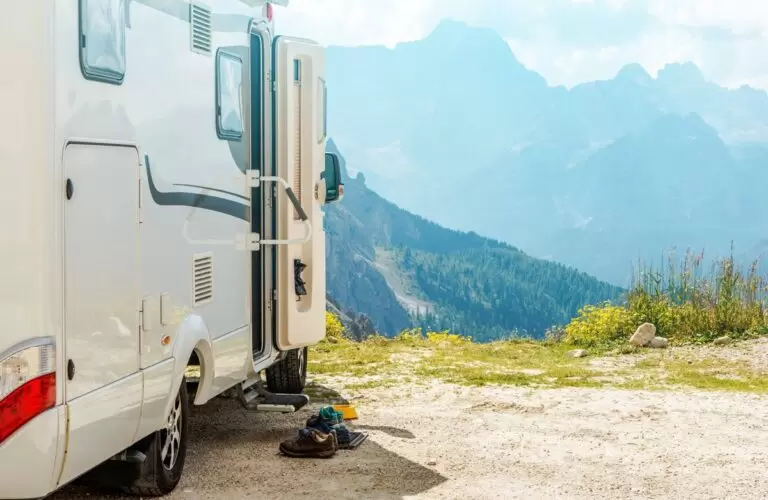

Whether for summer vacations with the family, to live in, or to make road trips feel more like home, a recreational vehicle (RV) is a great option to have when you’re planning to travel. But if you don’t already own one, purchasing an RV can put a significant dent in your wallet.
For most people, buying a new or used RV requires financing from a bank, credit union, or another type of lender. Fortunately, there are many types of loans and lenders to choose from when you are looking to finance a motorhome, travel trailer, fifth-wheel, camper van, or another type of RV.
Here are some of the best RV financing options to make your travel dreams a reality.
1. Obtain an RV Loan From a Bank or Credit Union
Most banks and credit unions offer traditional RV financing through secured loans, similar to an auto loan. Approval of an RV loan through a conventional financial institution will be based on various factors, including the age of the vehicle, your income, expenses, debt-to-income (DTI) ratio, credit history and score, and the amount of funds needed.
For large RV purchases, most institutions require a strong credit profile and earnings to get approved. You will typically need at least 10% down to obtain financing, which will lower your monthly payment.
New and used RV loans through a bank or credit union can be offered at a low interest rate, but the exact rate will depend on your credit, the term length, and the amount requested. Repayment terms will vary from bank to bank, but most range from two to twenty years and offer a fixed monthly payment.
This type of financing can be the quickest to obtain because you can work directly with the financing department at an RV dealer when you buy it through them. Many RV dealers have relationships with lenders or a network of loan providers and can help you find a loan in-house.
But what if you don’t have a down payment, can’t wait to save one, or were hoping for a better rate? Using home equity to buy an RV is another option, or taking out a personal loan could be a better fit for you.
2. Use Home Equity to Purchase an RV
If you’re a homeowner, you may have another option for financing your new or used RV purchase. A home equity loan, home equity line of credit, home equity sharing agreement, or cash-out refinance loan may be better suited for you if you own a home outright or owe less on your mortgage than the property is worth.
Home Equity Loans & Lines of Credit
Home equity loans and lines of credit typically offer lower interest rates than conventional RV loans, and repayment may be extended. However, you must have a home with enough equity and decent credit to qualify.
Using home equity may incur additional closing costs to establish the installment loan or line of credit, which you should factor in when considering these options. Further, your home is used as collateral to back the loan, not the RV, which could present real estate problems should you fail to repay in line with the terms of your agreement.
Home equity loan (HEL or HELOAN) and home equity line of credit (HELOC) closing costs are typically rolled into the borrowed amount and deducted at closing, rather than requiring you to pay upfront. However, that’s not always the case. Not all lenders require them, but you could pay slightly higher rates than expected when factored into the equation.
If you have money to put down, you may be able to use it to reduce your interest rate and monthly payment by buying mortgage points rather than using it to reduce the total loan amount. You can also choose to do both.
Home equity loans and lines of credit can be great ways to finance an RV for someone with good credit who can secure a low rate and a zero-closing-costs offer, or someone who doesn’t have a lump sum to put down on a recreational vehicle. Home equity loans are typically fixed-rate products, while home equity lines typically have a variable annual percentage rate (APR).
Home Equity Agreement (HEA)
A home equity sharing agreement, often called an HEA loan, is another option for buying an RV. Unlike home equity loans and lines of credit, a typical home equity agreement allows you to receive money for a portion of your home’s future sales price without paying interest on a loan.
Similar to home equity loans and lines of credit, an HEA will likely require an upfront payment of the closing costs or a deduction from the proceeds. However, no additional funds are needed to close the transaction, and you don’t owe any money until the end of the term, or you sell your home.
For some RV buyers, an HEA can be an attractive alternative to traditional financing, particularly for those who may not qualify for the most favorable terms on conventional RV loans, or those who want to avoid a down payment and monthly payments.
Similar to HELOANs and HELOCs, it will likely take a few weeks to a couple of months to close the transaction, as the HEA company will go through the typical steps to fully evaluate your property and determine its value and available equity.
Cash-Out Home Refinance Loans
When you have equity in real estate, you can also refinance it to get cash out. A cash-out refinance loan can be an especially smart option if you can use it to finance the RV and reduce your current mortgage loan interest rate at the same time.
Similar to other home equity lending options, you won’t likely be required to come up with a down payment but will probably have to pay closing costs, which you might be able to roll into the loan. It will also take a few weeks to obtain the proceeds while the mortgage lender evaluates your property and prepares the closing documents.
The interest rate on an RV loan is likely to be the lowest with a cash-out refinance; however, if the interest rate on your entire mortgage goes up, that could offset the benefit of paying a lower interest rate on the RV.
You can also refinance your home even if the original mortgage has already been paid off.
3. Get a Personal Loan to Buy an RV
Typically, new and used RV financing options are limited to specialty bank or credit union loans and home equity products, given the high purchase price of recreational vehicles. However, we are going to share with you how to finance an RV with a personal loan as an alternative to those methods.
If you have good credit and income, you can also buy a recreational vehicle with a personal loan and get a great rate. But it’s more difficult to obtain loans over $75,000. Personal loans of $100,000 or more aren’t unheard of, though.
Generally, you won’t need a down payment or collateral for a personal loan, but you might have to pay an origination fee of 1-12% of the loan amount to cover processing costs. You will be required to pay this fee upfront in cash or have it deducted from the funds. The percent you are charged will be determined by your creditworthiness and may include other factors.
One major downside to an unsecured personal loan is the term length. Repayment of the loan, usually 2-7 years, will be shorter than the other popular options, which could mean a higher monthly payment. But you’ll own the RV outright and won’t need to wait for property evaluations or related documentation.
A personal loan can be a great option if you’re buying a small, inexpensive RV or a used one from a private seller and need the money quickly.
Final Thoughts on Financing an RV
To prepare for your RV purchase, take the time to understand what you can afford to borrow based on your monthly debt, income, and expenses, and know how each financing option affects your current and long-term financial situation.
Before applying for a conventional RV loan, using home equity, or obtaining a personal loan, prepare to have money set aside to satisfy any down payment requirements or other out-of-pocket costs associated with your choice.
Lastly, don’t forget about taxes. There are a few tax deductions that could help with your purchasing decision. Just be sure to double-check with your tax professional to ensure they apply to your situation.
I hope you found this article on the “best ways to finance an RV” helpful. If you have a question, personal tip, or another comment, please don’t hesitate to send us a message. Happy RV’ing!